
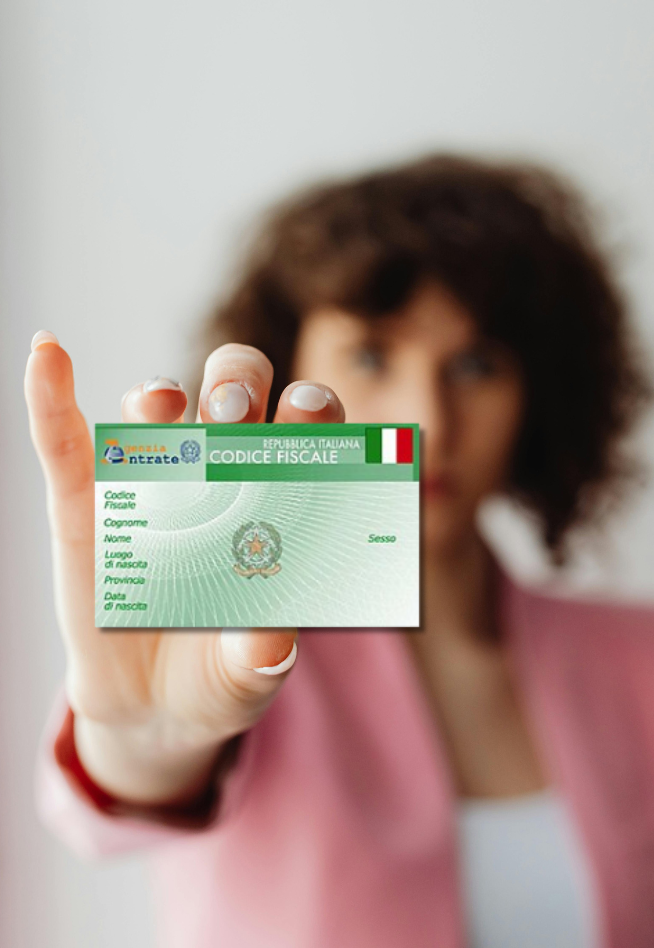
If you are looking to relocate in Italy or have ever spent a significant amount of time in the country, you might have heard of the codice fiscale. What is this “fiscal code” exactly, how can you obtain one, and what do you need it for? The good news is, you can get it either inside or outside of Italy, and the process is relatively simple. We break down more about it below.
What is the codice fiscale?
Italy’s codice fiscale, or “tax code” or “fiscal code” is a 16-character alphanumeric code issued by the Italian Revenue Agency and used for many governmental purposes. From getting an Italian SIM to signing a rental contract or a mortgage to opening a bank account, there are many everyday instances where you could be asked for yours. It is also tied to the tessera sanitaria, your Italian health insurance card, which you can frequently be asked for when buying items at the pharmacy. Even non-Italian citizens can get a codice fiscale. Unlike the American social security number, the codice fiscale is not particularly private.
How does it compare to similar tax IDs in other countries?
Unlike Italy’s tax ID, the U.S. social security number is a 9-digit code that is highly sensitive and personal. While also used for government services, it is mostly tied to employment, credit and loans, and other financial services. In fact, one used to only get assigned a social security number once starting employment; in the late 1980s it began to be assigned at birth, as Italy’s codice fiscale is for native-born Italian citizens.
The UK’s National Insurance number is similar to the codice fiscale in its use for banking, taxes, and online government services. Unlike the U.S.’s social security number, it is not as tied to one’s identity and therefore not as sensitive.
Australia has a Tax File Number that is also used for employment, banking, and tax purposes. Both individuals and corporate entities can have one.
What do you need for Italy’s codice fiscale?
Applying for your own codice fiscale, whether inside or outside of Italy, is a simple process. You will need the following documents:
- A valid passport (and visa, if applicable)
- A valid permesso di soggiorno (if residing in Italy as a non-EU citizen)
- A completed application form
EU citizens who relocate to Italy or plan to reside there long-term will also need a codice fiscale.
How to apply for the codice fiscale
Applications can be made from within Italy at the local Agenza delle Entrate (Revenue Agency). Most of the time this is done in person, but applications can also be made online.
If residing abroad, you can apply for your codice fiscale at the nearest Italian consulate. Rather than an in-person visit, most consulates will direct you to an online application through the Fast IT portal.
If you apply from within Italy, you will most likely get your codice fiscale the same day. If applying outside of Italy via a consulate, the process could take from a few days to a few weeks, depending on consular demand.
Conclusion
Have further questions or need help with any part of the Italian relocation process? Italian Citizenship Assistance is here to help! Contact us today at [email protected].
